







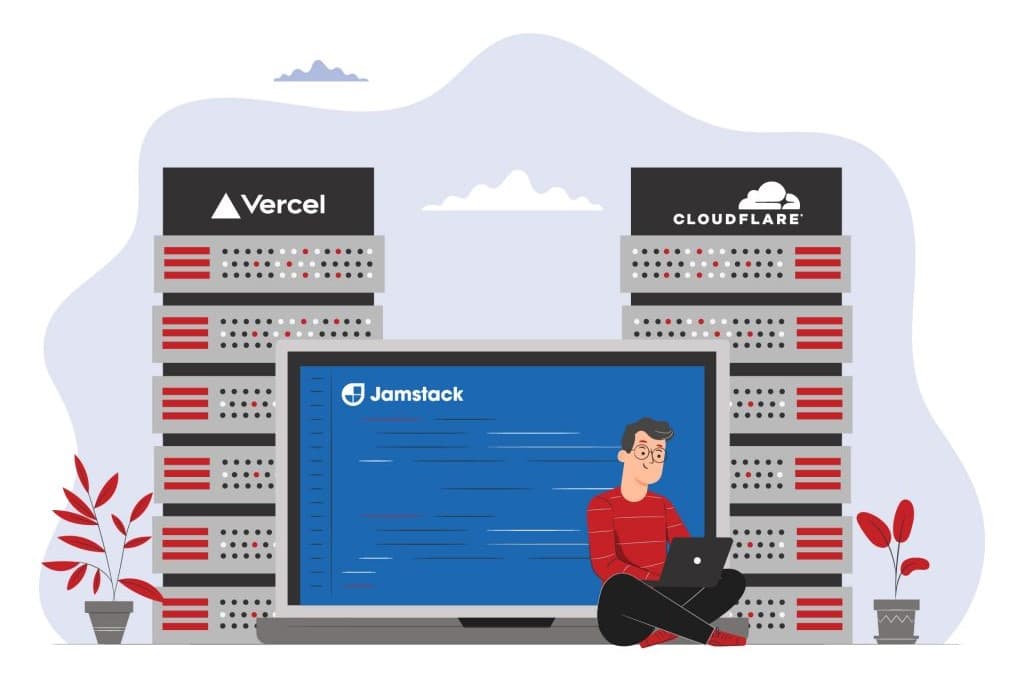
Vercel vs Cloudflare: a technical overview of popularity, pricing, and speed
Vercel and Cloudflare are now two of the most common platforms shortlisted for modern frontend and edge deployments, but they solve slightly different problems. Vercel is the default choice for many Next.js teams because the developer experience is tightly integrated with preview deployments, framework-aware builds, image optimization, and opinionated workflows. Cloudflare is increasingly popular with teams that care about network reach, edge execution, DDoS protection, and combining application hosting with platform services such as Workers, R2, KV, Durable Objects, and caching at the edge.
In terms of popularity, Vercel tends to dominate the conversation in React and Next.js product teams, startups, and content-heavy applications that want a fast route from Git push to production. Cloudflare is more popular among teams optimizing for infrastructure control, globally distributed execution, lower-latency APIs, and cost discipline at scale. The practical takeaway is that Vercel often wins the developer-experience vote, while Cloudflare wins more often when architecture, networking, or platform economics matter as much as the UI deployment flow.
Pricing is where the comparison becomes more nuanced. For small projects, both platforms can look inexpensive, but cost behavior changes under real traffic. Vercel can be very efficient for teams that mostly need frontend hosting, previews, and managed framework features, yet bills can rise quickly once bandwidth, image optimization, advanced analytics, and server-side execution increase. Cloudflare is frequently cheaper for globally distributed delivery and edge-heavy workloads because its pricing model is built around its network, and products like R2 can reduce egress-related pain. If the question is simply which platform is usually cheaper at scale, Cloudflare often has the edge, especially for workloads with heavy traffic or data movement.

Vercel is usually the fastest path to shipping a polished Next.js product, while Cloudflare is often the faster and cheaper platform once edge distribution and infrastructure efficiency become the real bottlenecks.
Gichinga
Where each platform tends to win
- Vercel is often more popular with Next.js teams because previews, deployments, and framework defaults are tightly integrated.
- Cloudflare is often cheaper for edge compute, global caching, and storage-heavy workloads where egress economics matter.
- Vercel usually feels faster for frontend teams to adopt because the platform hides more operational complexity.
- Cloudflare often delivers lower global latency for APIs and middleware-style logic due to its broad edge network footprint.
- The better choice depends on whether your bottleneck is developer velocity, network performance, or infrastructure cost over time.

On raw speed, there is no single universal winner. Vercel is often faster for teams building and iterating on Next.js applications because deployment, preview URLs, and framework features are first-class. Cloudflare is often faster at request execution close to the user, especially for lightweight edge logic and globally cached content. If you are comparing which is more popular, Vercel currently has stronger mindshare in frontend product development. If you are comparing which is cheaper, Cloudflare often wins on infrastructure economics. If you are comparing which is faster, the answer depends on whether you mean time-to-ship, page delivery, API latency, or edge execution.




(02) Comment
Daniel M.
March 12, 2026This is a fair comparison. The biggest mistake teams make is assuming Vercel and Cloudflare are direct substitutes in every case. One is usually optimized around application workflow, the other around edge infrastructure.
Aisha K.
March 12, 2026Agreed on cost. Once bandwidth and edge traffic increase, Cloudflare pricing can be easier to justify, but Vercel still feels hard to beat for teams that want the most polished Next.js workflow.